
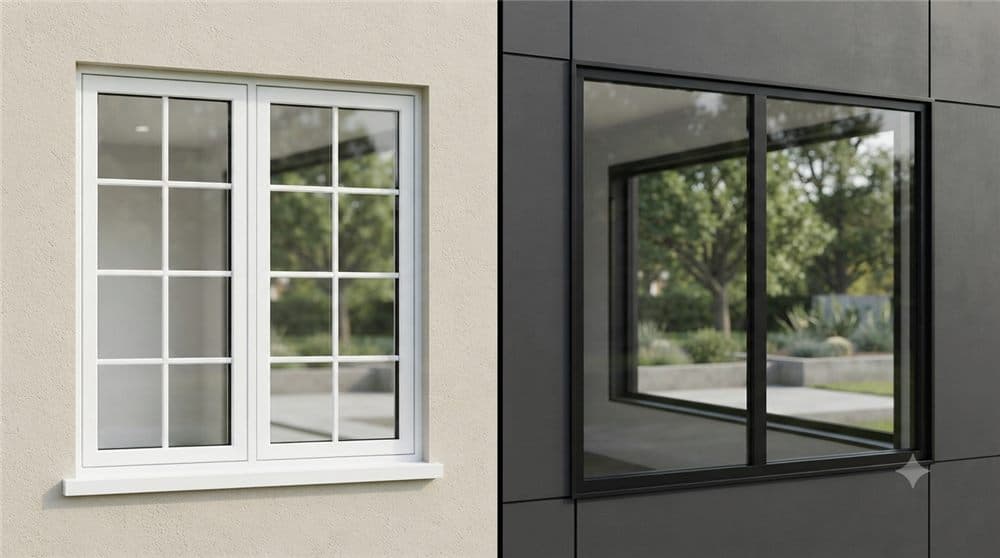
Soundproof Windows: Do They Really Work?
Short answer: yes. Soundproof windows noticeably reduce outside noise — often cutting the loudness you perceive by half or more — but no window blocks sound 100%. What they really do is turn a disruptive street into a calm, comfortable room. Below we explain exactly how they work, what the STC rating means, and how much they cost.
How Do Soundproof Windows Actually Work?
Sound is energy, and stopping it comes down to three things: mass, air gaps and damping. Thicker, heavier glass reflects and absorbs far more sound energy than a thin single pane.
A wider air (or gas) cavity between panes breaks the path sound travels, and using two panes of different thicknesses blocks a broader range of frequencies. Finally, laminated glass — two sheets bonded with a plastic interlayer — damps vibration and is the single biggest upgrade you can make for noise.
What Is an STC Rating? (And Why It Matters)
STC (Sound Transmission Class) measures how well a window blocks airborne noise — the higher the number, the quieter your room. A standard single-pane window rates around 26–28 STC; a good double-pane unit reaches the low-to-mid 30s.
True soundproof windows push into 45+ STC territory. That's the difference between clearly hearing a conversation outside and barely noticing traffic. If you're shopping for quiet, STC is the number to compare.
Do Soundproof Windows Block All Noise?
No — and any honest supplier will tell you so. Soundproof windows dramatically lower traffic, aircraft and street noise, but they can't create total silence, especially against very low-frequency sounds like heavy bass or rumbling trucks.
The realistic goal is comfort: turning a loud, distracting environment into a calm one. For most homes near a busy road, that improvement is night-and-day.
Single-Pane vs. Double-Pane vs. Laminated Glass for Noise
Single-pane windows offer almost no noise control. Double-pane is a solid step up, and pairing two different glass thicknesses widens the range of sound it blocks.
Laminated glass is the star for sound: its interlayer absorbs vibration far better than an equivalent solid pane. If noise is your priority, laminated glass — often combined with double glazing — is the configuration to ask for.
How Much Do Soundproof Windows Cost?
Cost depends on size, glass build (lamination, thickness, gas fill) and frame material. As a rough guide, expect a meaningful premium over standard double glazing, since acoustic laminated glass and thicker panes add to the price.
The most cost-effective move is to prioritise the rooms that face the noise — bedrooms and living areas — rather than treating the whole house at once. Request a quote and we'll price your specific openings.
Are Soundproof Windows Worth It?
If you live on a busy avenue, near an airport flight path, or beside a train line, the answer is almost always yes — better sleep and a calmer home are hard to put a price on.
If your street is fairly quiet, standard double glazing may already be enough. Tell us your situation and we'll recommend the right build — request your free quote and we'll take it from there.
Frequently Asked Questions
Can regular windows be soundproofed?
You can improve them somewhat with better seals or secondary glazing, but for a real difference you'll want purpose-built acoustic glass — regular windows have a hard ceiling on how quiet they get.
Is triple-pane better for noise than double-pane?
Not necessarily. Laminated glass and mismatched pane thicknesses matter more for sound than simply adding a third pane. A well-designed double-pane acoustic window can out-perform a basic triple-pane.
Do soundproof windows help with heat too?
Yes — the same thicker glass and sealed cavities that block sound also improve thermal insulation, so you get quieter and more energy-efficient windows in one upgrade.
Ready to price your project?
Request Your Free Quote